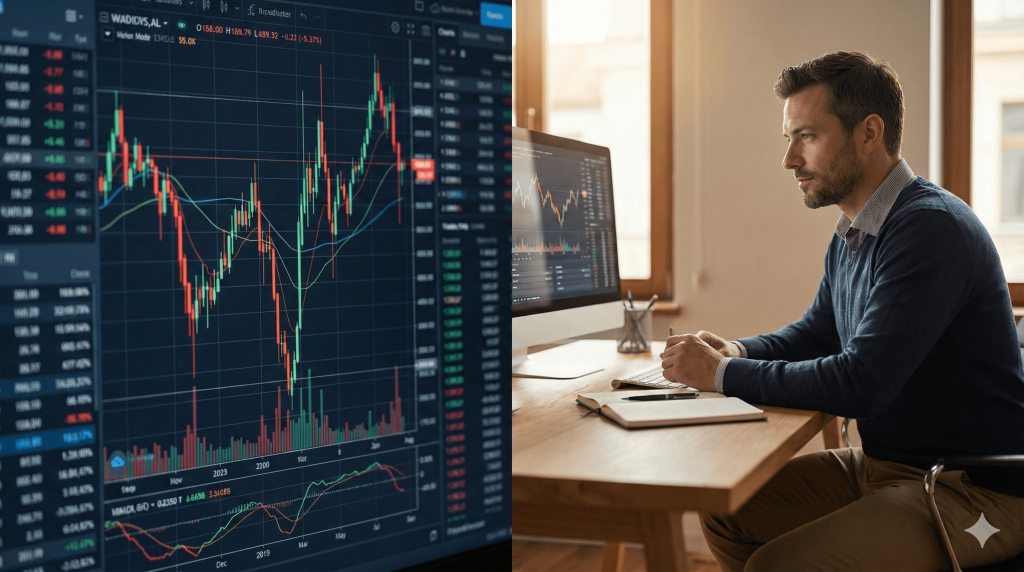
There’s something rather instructive happening in the markets right now, and it’s not what you’d expect. Whilst the indices gyrate and volatility measures spike, a quieter revolution is taking place in trading communities across the globe. People are going back to school.
After years of speculative excess, meme stock mania, and the intoxicating promise of AI-driven riches, traders are rediscovering something that never went out of fashion among professionals: the fundamentals actually matter. Rather a lot, as it turns out.
The surge in educational content we’re witnessing isn’t coincidental. Market choppiness has a way of separating those who understand what they’re doing from those who’ve simply been along for the ride. When the trend stops being your friend, suddenly those boring concepts like risk-reward ratios and position sizing become rather more interesting than the latest hot tip from social media.
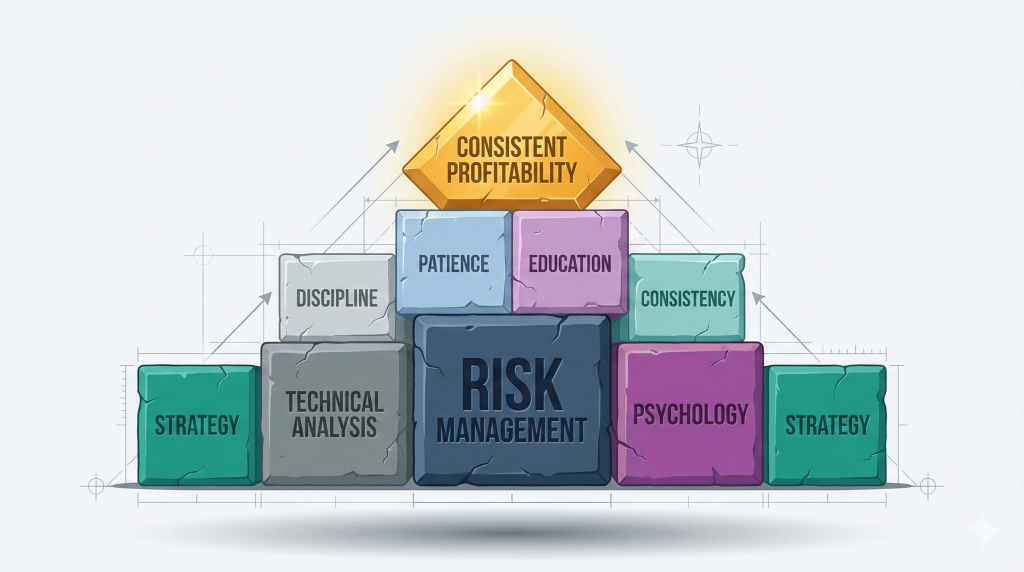
The Fundamentals Revival
What’s particularly fascinating about this educational renaissance is its breadth. This isn’t simply about learning candlestick patterns or discovering the latest indicator. The content gaining traction covers the entire spectrum of what separates consistent traders from hopeful gamblers.
Risk-reward ratios, once dismissed as tedious mathematics, are now the subject of detailed threads and video explainers. Emotional control, that unsexy topic that every successful trader swears by, is finally getting its moment in the spotlight. Diversification, often ignored during bull runs when everything seems to go up anyway, is being reconsidered with fresh eyes.
The timing couldn’t be better. Markets have a cruel way of testing conviction, and without a solid foundation in these fundamentals, traders find themselves making emotional decisions precisely when discipline matters most. The educational push we’re seeing isn’t about adding complexity to trading. It’s about stripping away the noise and focusing on what genuinely works across different market conditions.
Risk Management: The Forgotten Pillar
Here’s something I’ve learned over decades in the markets: you can have the world’s best entry signals and still lose money if your risk management is poor. Conversely, mediocre entries with excellent risk management can keep you in the game long enough to succeed.
The current surge in risk management education reflects a harsh truth many traders have recently discovered. During the relentless bull markets of recent years, sloppy risk management got masked by rising tides lifting all boats. Take away that tailwind, add some genuine volatility, and suddenly those ‘minor’ drawdowns become account-threatening events.
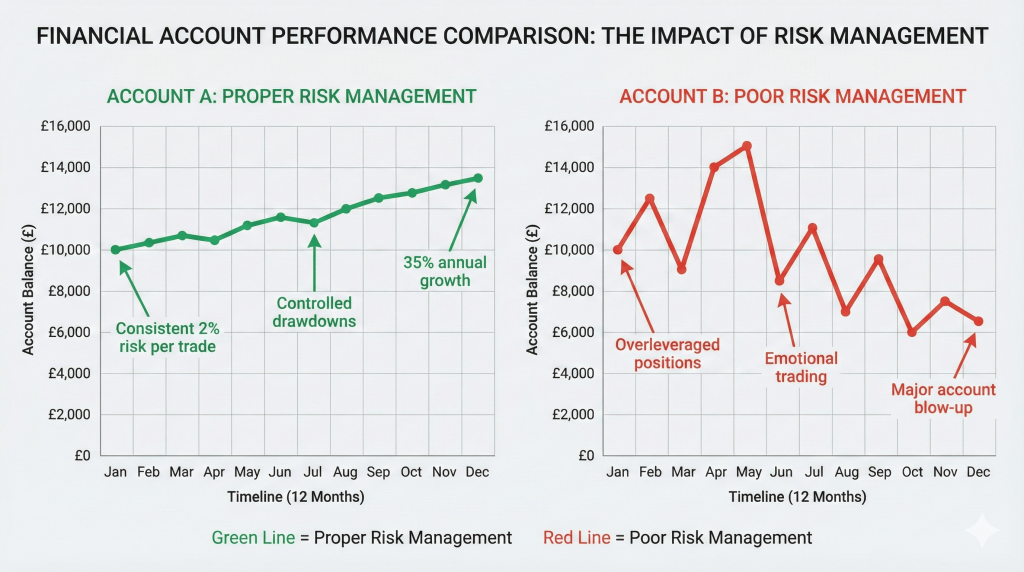
The educational content proliferating now emphasises practical applications: how to actually calculate position sizes, why risking more than 1-2% per trade compounds losses exponentially, and how proper stop-loss placement isn’t just technical analysis but mathematical necessity. These aren’t revolutionary concepts, mind you. They’re just revolutionary to those who’ve never properly implemented them.
Psychology Over Prediction
If there’s one area where the education boom is most pronounced, it’s trading psychology. And rightly so. Technical analysis can tell you where to enter a trade, but psychology determines whether you’ll have the discipline to wait for that entry, the courage to take it when it arrives, and the emotional control to exit according to your plan rather than your feelings.
The recent FOMO-driven surge in AI stocks serves as a masterclass in psychological pitfalls. Traders who understood their own psychology saw the warning signs: fear of missing out, confirmation bias, herd mentality. Those who didn’t find themselves buying tops and selling bottoms, then wondering what went wrong.
Current educational content is addressing this head-on. Courses and workshops are incorporating behavioural finance, emotional awareness techniques, and practical methods for developing discipline. This represents a maturation of trading education from purely technical to genuinely holistic.
The message resonating loudest? You’re not just trading the markets. You’re trading your own psychology against the market’s collective psychology. Understanding that dynamic is worth more than any indicator.
Building Your Arsenal: Watchlists and Diversification
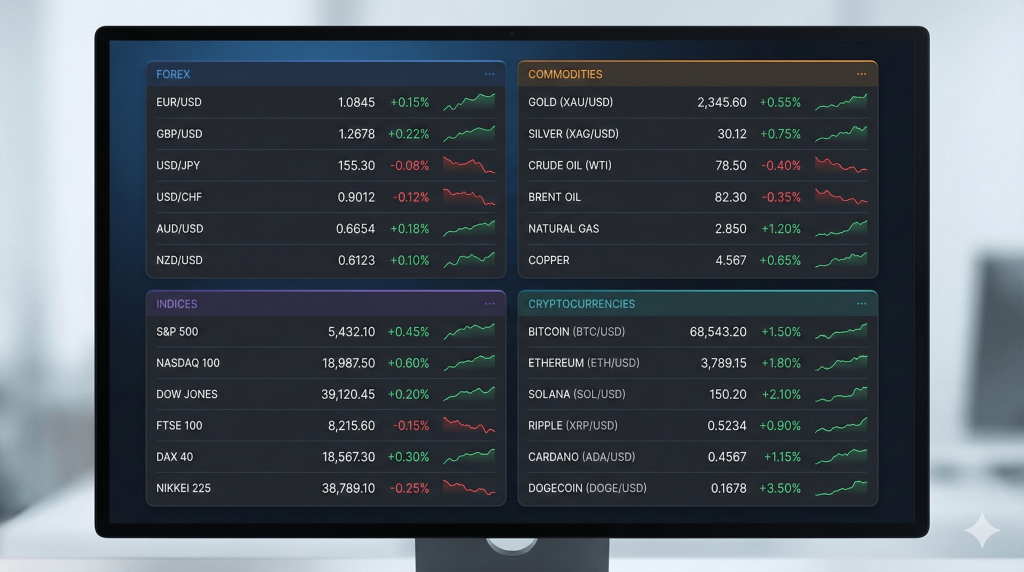
One of the more practical aspects of the educational surge involves teaching traders how to prepare during choppy markets rather than panic. Volatility, whilst uncomfortable, creates opportunities for those positioned to exploit it. The key word being ‘positioned.’
Building watchlists during turbulent periods is a skill being rediscovered. When markets are chopping about, it’s easy to chase random moves. Systematic watchlist development forces discipline: identify sectors showing relative strength, note key technical levels, monitor correlations, and prepare scenarios rather than react to them.
Diversification, too, is getting a fresh look. Not the bland ‘don’t put all your eggs in one basket’ advice, but genuine understanding of correlation, risk distribution across timeframes and instruments, and how different assets behave during various market regimes. This is professional-grade thinking becoming accessible to retail traders.
The educational content emerging isn’t suggesting traders become unfocused by tracking everything. Rather, it’s about having a prepared mind and a structured approach when opportunities arise.
The Beginner’s Advantage
There’s an interesting paradox at play in current market conditions. Experienced traders who’ve developed bad habits during easy markets sometimes struggle more than thoughtful beginners who start with proper foundations.
The advice gaining traction for new traders is refreshingly sensible: start with index funds, understand broad market exposure before attempting to pick individual stocks, and build experience without betting the farm. This counters the prevailing narrative of recent years where beginners were encouraged to jump straight into options trading or leveraged positions.
Index funds might not be exciting, but they provide something invaluable: time to learn without catastrophic consequences. They allow new traders to understand market cycles, develop emotional resilience, and build their knowledge base whilst maintaining reasonable exposure.
This measured approach reflects a broader shift from speculation to strategy. The traders emerging from this educational renaissance will likely be better equipped than those who learned during the anything-goes bull markets.
Discipline Over Speculation
What we’re witnessing is fundamentally a rejection of get-rich-quick narratives in favour of build-wealth-sensibly approaches. The educational content proliferating across platforms shares a common thread: trading success comes from discipline, consistency, and proper risk management rather than finding the next 10-bagger.
This isn’t to suggest aggressive trading or speculation has no place. Rather, it’s about understanding that speculation without foundation is simply gambling with extra steps. The most successful traders I’ve encountered over the years weren’t the most aggressive or the most clever. They were the most disciplined.
Current market conditions are creating a generation of traders who’ll hopefully understand this truth from the outset rather than learning it through painful experience.
Looking Forward
Market choppiness is uncomfortable, certainly, but it serves a valuable purpose. It separates those committed to genuine skill development from those seeking shortcuts. The surge in quality educational content we’re seeing isn’t merely reactive. It’s constructive.
For traders willing to invest time in proper education, current conditions present an opportunity. Not necessarily to profit immediately, but to build the foundation for long-term success. The fundamentals being emphasized now—risk management, emotional control, systematic analysis, diversification—these aren’t temporary fixes. They’re permanent advantages.
The markets will eventually find direction again. They always do. When that happens, the traders who used this choppy period to educate themselves rather than merely survive it will be positioned to capitalise. That’s not speculation. That’s simply how markets work.
The question isn’t whether markets will reward preparation. They invariably do. The question is whether you’ll use this opportunity to prepare.